

Hi! I'm Mila, the co-founder of Irritated.
Long before I ever started a skincare brand, I spent a decade trying to get my eczema and dermatitis under control.
Like a lot of people with sensitive skin, I spent years buying moisturizer after moisturizer hoping the next one would finally be the one. Sometimes my skin would feel better for an hour or two, but by the end of the day it was tight again, flaky again, irritated again.
It wasn't until I started becoming desperate to find a solution after ten years of pain and frustration that I realized something really important: hydrated skin and a healthy skin barrier aren't the same thing.
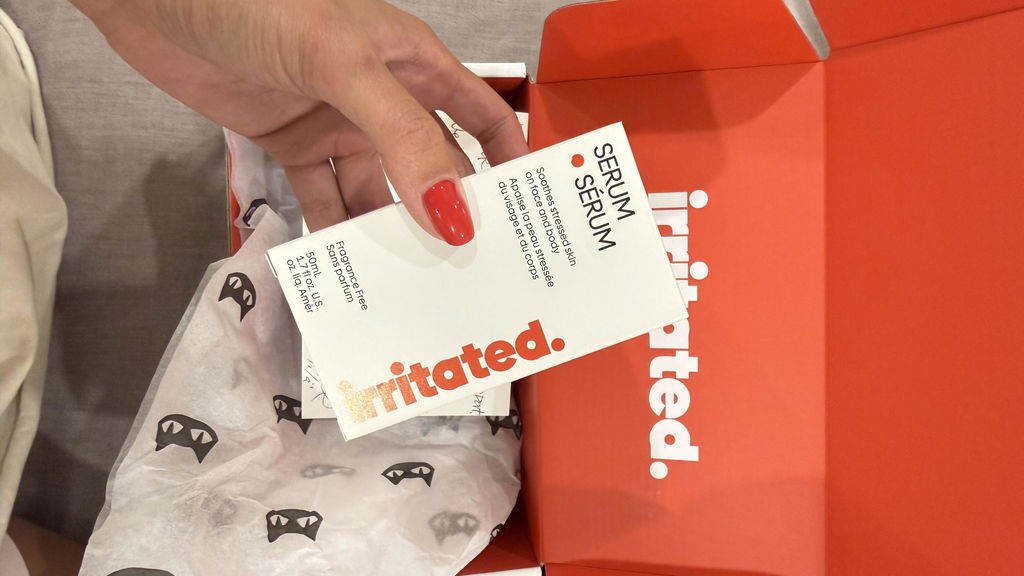
It's a distinction that completely changed how I think about skincare and what eventually led to the creation of our cult-fave face and body serum.
Does moisturizer fix your skin barrier?
This is one of the questions Lucy, my co-founder, and I get asked all the time.
The short answer? Not always.
A moisturizer absolutely has a place in your routine. It can make your skin feel softer, smoother, and more comfortable almost immediately.
But does moisturizer fix skin barrier damage? It depends.
Many moisturizers are designed to hydrate your skin or slow water loss. That can be helpful, but if your skin barrier is already compromised, hydration alone often isn't enough.
I like to think of it this way: if your skin barrier has tiny cracks in it, adding more moisture without helping repair those cracks is a bit like pouring water into a bucket with holes. You'll keep adding more, but it won't stay there for very long.
What is your skin barrier?
Your skin barrier is the outermost layer of your skin, called the stratum corneum. Think of it like a brick wall. Your skin cells are the bricks, while lipids like ceramides, cholesterol, and fatty acids are the mortar holding everything together.
When that wall is healthy, your skin is much better at staying hydrated.
When it isn't, water escapes much faster than it should: a process called transepidermal water loss (TEWL).
That's why so many people struggle with dry skin that won't hold moisture. It isn't always because they aren't moisturizing enough. Sometimes their skin simply can't hold onto the moisture they're already giving it.
The difference between moisturizer and barrier repair
Understanding the difference between moisturizer and barrier repair was honestly one of the biggest lightbulb moments for me.
A moisturizer helps your skin feel hydrated.
Barrier repair helps your skin become better at staying hydrated.
Most moisturizers work using a combination of three ingredient types.
Humectants: glycerin, hyaluronic acid, and beta glucan pull water into your skin.
Emollients: squalane smooths rough patches and softens your skin.
Occlusives: dimethicone creates a protective layer that helps slow water loss.
They're all important, and they're all doing different jobs.
Why your skin still feels dry after moisturizing
If you've ever finished your skincare routine only to feel dry again by lunchtime, you're definitely not alone.
Some of the biggest signs of a compromised barrier include:
- Your moisturizer seems to disappear after an hour.
- Your skin feels tight after cleansing.
- Products suddenly sting when they never used to.
- Redness hangs around longer than it should.
- Makeup clings to dry patches.
- Your skin somehow feels oily and dry at the same time.
I experienced almost every one of these while dealing with eczema. In fact, I was actually let go from a sales job in my late teens because customers kept asking me what was wrong with my face. Can you imagine!!
For years, I assumed I just hadn't found the right moisturizer.
In reality, my skin needed so much more than hydration…
How to actually repair your skin barrier
If you're wondering how to actually repair skin barrier function, my advice is to stop thinking about finding the richest moisturizer on the shelf.
I always look for formulas that include:
- Humectants like glycerin to bring water into the skin.
- Emollients like squalane to soften and smooth.
- Ceramides, cholesterol, and phytosphingosine to help replenish the skin barrier.
- Gentle occlusive ingredients that help keep all that hydration where it belongs.
That's actually the philosophy we built irritated around!
After spending all those years dealing with eczema and dermatitis, I didn't want to create another moisturizer that only felt nice for an hour. I wanted to create something that supported sensitive skin in a more complete way by combining hydration with ingredients that help strengthen the skin barrier over time.
Ingredients that support skin barrier repair found in Irritated's Face + Body Serum
- Ceramides NP, AP, and EOP: replenish the lipid structure between skin cells
- Cholesterol: essential component of the barrier's mortar layer
- Phytosphingosine: supports ceramide production in the skin
- Glycerin: draws water into the skin and helps it stay there
- Squalane: lightweight emollient that softens and smooths
- Beta glucan: calms sensitivity and supports barrier recovery
- Dimethicone: gentle occlusive that slows transepidermal water loss
My biggest takeaway
If there's one thing I wish someone had told me years ago, it's this:
Moisturizing your skin and repairing your skin barrier are related, but they're not the same thing.
Once I understood the difference between moisturizer and barrier repair, skincare became so much less frustrating.
If you have dry skin that won't hold moisture, it doesn't automatically mean you need a thicker cream. It might mean your skin barrier needs a little more support.
And when your barrier is healthier, something amazing happens: your moisturizer suddenly works a whole lot better!!
If you ever need help with your skin barrier or have any questions pertaining to your irritated skin, feel free to reach out to me mila@shopirritated.com I’m always here to help xx
0 comments